Crowding the Plate Is Not Just in Baseball

I enjoy watching baseball because there is a strategy behind everything. Sometimes the Pitcher changes there Pitch to force the Batter to react. Sometimes the defense throws something unexpected at the offense and completely disrupts a game plan.
What comes to mind about something I've seen on the fireground. Think about a batter who's crowding the plate. When the batter moves closer to home plate, they are trying to gain better coverage of the outside part of the strike zone. It can give them an advantage, but it also comes with a risk. Move too close, and the pitcher can work inside, jam the hitter, and force them to back off.
The batter's position changes how the pitcher looks at the plate.
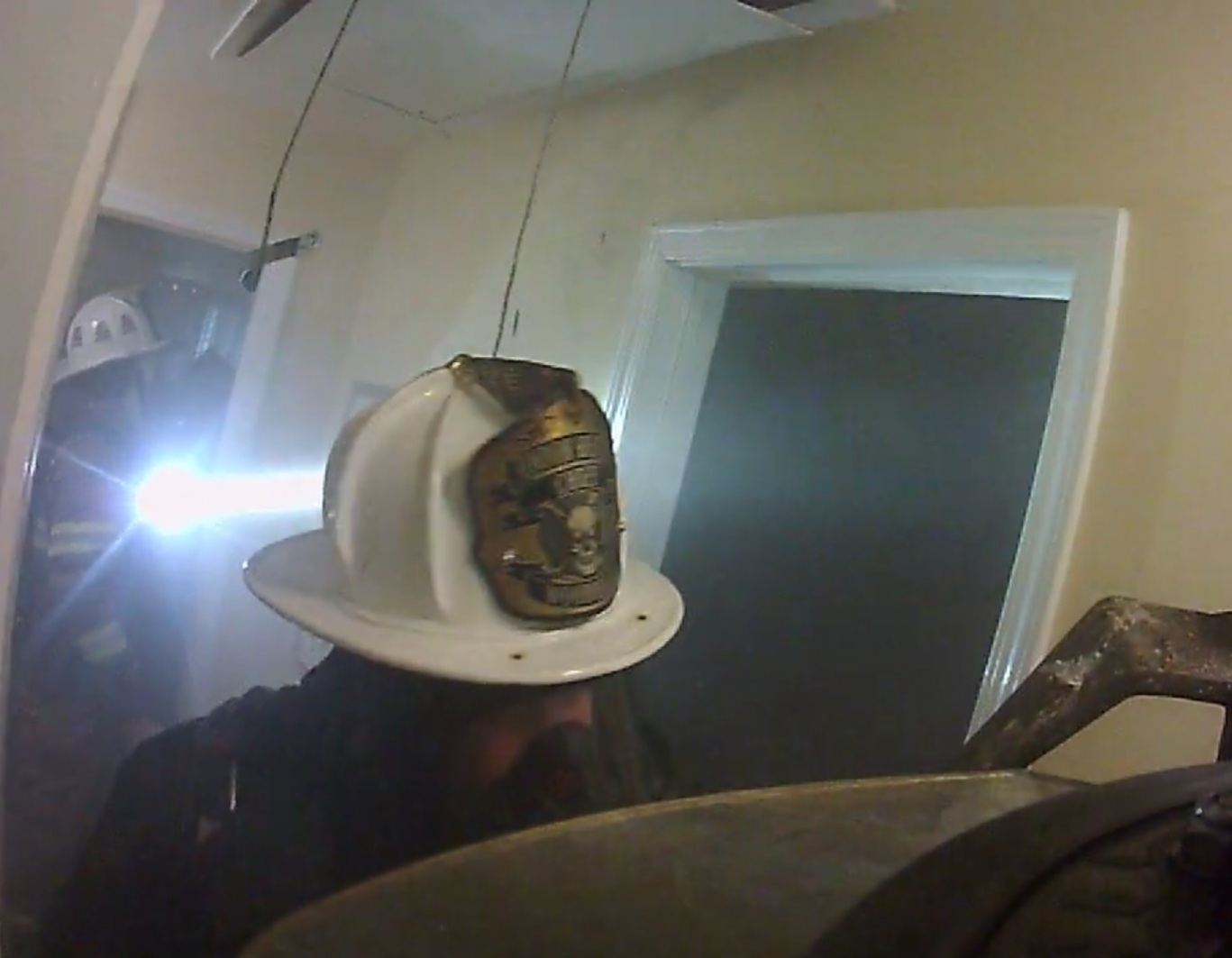
So, what does this have to do with the fireground? More than you think. Think about the last working fire you were at, trying to stretch a hand-line through the front door, around a hallway, or up a narrow staircase, and suddenly everybody wants to stand in the same place, firefighters in doorways or standing on the stairs. members pushing past the nozzle team just to get a great view of the fire, hindering the truck companies as they are trying to do their jobs and their tasks as well? The engine company is fighting more firefighters than fire just trying to move the handline. We have officially started crowding the plate.
Why? We all have seen the photographs and the videos of five or six firefighters packed into an entrance with fire rolling out the door over their heads. It looks awesome. It might look great on Social Media, but we need to ask a more important question: Is everybody standing there actually helping the operation? If the answer is no, move. Your job on the fireground is not to find the best place to watch the fire; it is to make the operation better. If your engine needs hose, feed them the hose. If your truck needs access, give them the access. If your assignment is complete, communicate and find your next job. Standing in a tight area because that's where the action is can create another problem for the people actually trying to accomplish our mission.
This is where the line boss's, or officer's, spot becomes important. Whether you call this person a line boss, lieutenant, captain, nozzle officer, or something completely different, somebody needs to control that engine company's movement, and communication needs to be clear. You don't need to be rude or disrespectful, just clear. "move now", "out of the way"
Sometimes it's excitement, or it's inexperience. It may be because a department does not get a large number of working fires, and when that fire finally comes in, everybody wants to be involved. Simply put, there hasn't even been enough training explaining where people should be once the operation begins in tight areas of work. Whatever the reason, the result can be the same: We slow ourselves down. A doorway is not where we want to stop, nor is the middle of a staircase or the middle of a flow path in a hallway. Getting the engine company into position where we can put water on the fire is our objective.
Military and law enforcement often talk about doorways and similar confined areas as dangerous transition points because movement becomes restricted. This presents a similar problem to us. Several firefighters pile into a doorway or narrow staircase, and movement becomes difficult. Think about it: The nozzle firefighter moves forward, but the hose doesn't. The backup firefighter pulls with no success to get more line. The door firefighter pulls as well, only to find out that somebody is standing on the line as they are trying to squeeze past to be in the mix, but not to help.
Now the engine company is working harder to move 10 feet of hose than it should have taken to move 50. The fire isn't waiting for us to figure this out. Make a hole, give us the stairs, feed us more hose. There should be no confusion about what needs to happen.
Think about a pitcher dealing with that batter crowding the plate. Eventually, the pitcher is going to establish the inside part of the plate. On the fireground, the boss needs to establish the working space needed for the engine company to operate. This is not an engine versus truck conversation; this is the exact opposite. Good engine work makes truck work better. Good truck work makes engine work better. The question is whether your department has trained both companies to operate around each other.
What happens when the engine is advancing up a narrow staircase? Where should the truck company be? Can members move past the engine company safely to perform their tasks and their obligations? Should they wait until the line reaches a certain point? Who controls the stairwell? Who feeds more hose? Who opens the space ahead of the line? These questions should not be answered for the first time at 2:00 AM with fire showing. They should have already been worked out on the drill ground.
The easy way to fix crowding the plate is to recreate it during training. Take your normal staffing, apparatus, and hose loads, and put the company in places where congestion actually will happen: narrow hallways, staircases, apartment entrances, a second-floor stretch, or a tight front porch. Watch what happens. Where does the hose kink? Where does it stop advancing? Where do firefighters naturally want to stand? Can the truck move around the engine? Does the backup firefighter have the ability to work? Does the door position firefighter have the ability to work as well? Can additional members feed hose without getting in the way, giving the right amount of hose and not too much or too little? Is the officer able to see what is happening? You might be surprised how quickly a normal stretch becomes complicated when six firefighters are trying to occupy a space meant for two.
We also should look at our SOPs and whether expectations are clear regarding the responsibilities of the engine company and the responsibilities of the truck company. Who owns the stairs during an advance? How do additional companies move around the first line? What does a firefighter do when their assignment is finished? Answers don't have to be complicated; they just have to be understood. Chaos usually fills the space where expectations don't exist.
This isn't to tell firefighters to stay away from the action; it is to make sure that everyone involved in that action is making the operation better. The best thing you can do for the nozzle team is to give them room, feed them hose when they need it or ask for it, and get ahead of them to open the building up. If your task as a truck company is to search for victims, search for fire, or open up to make easy access, simply moving out of a doorway or a small area gives us large wins and big victories.
Every firefighter wants to contribute, but contribution and congestion are not the same thing. The next time your company stretches through a doorway, into a hallway, or up a staircase, take a look around. Are we helping the line move? Are we hindering water application? Are we crowding the plate? Because the quicker we stop fighting each other for space, the quicker we can start fighting the fire.


Comments